
Best Phones with Silicon-Carbon Batteries (UK 2026) – The New Battery Tech Changing Everything
Reviewed for silicon-carbon battery tech, real-world endurance, charging speed, performance & value – updated 2026
🥇 POCO X8 Pro Max – Best overall silicon-carbon battery monster → Check price on Amazon UK
🥈 Redmi Note 15 Pro+ 5G – Best mid-range silicon-carbon phone → Check price on Amazon UK
🥉 Redmi 15 5G – Best budget silicon-carbon battery phone → Check price on Amazon UK
👉 Scroll down to see full reviews and Amazon UK links
Introduction
This guide is for UK buyers who want a phone that can genuinely last longer than the usual daily-charge routine. That includes heavy phone users, travellers, students, delivery drivers, field workers, mobile gamers, and anyone who spends long stretches on maps, video, 5G data, social apps, camera use or hotspot duty. In 2026, silicon-carbon batteries matter because they keep the familiar lithium-ion format but use a silicon-based anode system that can raise energy density, which is why phone makers are now fitting far larger batteries into handsets that still feel like mainstream smartphones rather than chunky niche devices. The result is simple from a buyer’s point of view: more battery life without automatically ending up with a comically thick phone.
That said, battery capacity alone is not everything. A huge battery paired with a weak chip, an inefficient display, poor thermal control or messy software can still feel frustrating. The best battery phone is the one that lasts a long time and still feels fast, practical and easy to live with every day. For this guide, I focused only on three current models that explicitly lean into silicon-carbon battery technology, that are recent enough to make sense for a 2026 buyer, and that fit the sort of UK Amazon shopping journey most readers actually use.
What Makes a Great Silicon-Carbon Battery Phone in 2026
- Silicon-carbon battery technology: These are still lithium-ion batteries, but the anode uses more silicon-based material blended with carbon rather than leaning mainly on graphite. In plain English, that means more energy can fit into a similar space, which is exactly why bigger battery numbers are showing up in normal-looking phones in 2026. [1]
- Battery capacity that actually changes daily life: A big number matters only if it moves you from “must charge every evening” to “can comfortably get through heavy use”. The three phones here range from 6500mAh to 8500mAh, and all three are positioned around long-endurance use rather than just spec-sheet marketing. [2]
- Real-world endurance, not just standby claims: Long web browsing, video, navigation, hotspotting and gaming matter more than headline standby figures. Review testing is especially useful because it shows whether a phone still feels strong once you leave the manufacturer’s ideal lab conditions. [3]
- Charging speed and charger compatibility: Massive batteries are far easier to live with when refills are sensible. POCO pairs its huge pack with 100W PPS charging, Redmi Note 15 Pro+ 5G also offers 100W charging, and Redmi 15 5G keeps things slower but cheaper at 33W. Just as importantly, charger bundles can vary by region and seller, so UK buyers should always check the actual Amazon listing contents.
- Efficiency from the chip and display: Big batteries last longest when the rest of the phone is not wasting power. A 3nm, 4nm or 6nm chipset, sensible refresh-rate behaviour and an efficient screen panel all affect the endurance you actually feel from morning to night.
- Heat management and long-term battery health: Fast charging and heavy gaming both create heat, so battery protection features, smart charging and proper cooling matter. Silicon-based anodes can improve energy density, but long-term stability still depends on battery management and how well the phone handles thermal stress. [4]
- UK price and value: In the end, the right battery phone is the one that fits your budget and your routine. Some buyers want the biggest possible battery headline, some want the most balanced mid-range package, and some simply want the cheapest phone that stops them carrying a power bank. [5]
Top 3 Silicon-Carbon Battery Phone Picks (UK 2026)
1. POCO X8 Pro Max – Best overall silicon-carbon battery monster
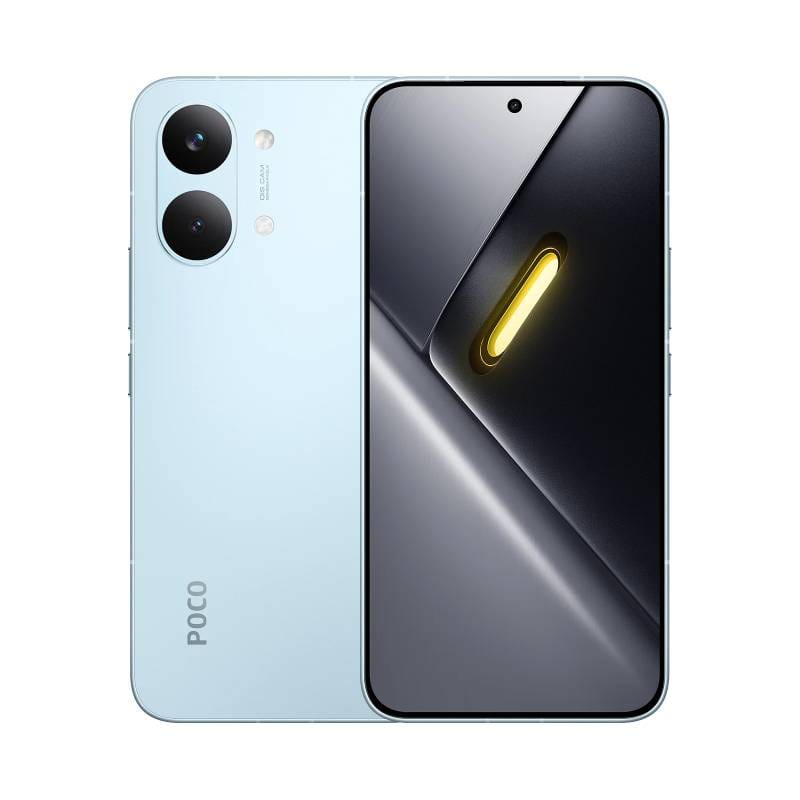
If you are buying specifically for the promise of new battery tech, the POCO X8 Pro Max is the easiest recommendation in this guide. Xiaomi gives it an 8500mAh battery, 16% silicon-carbon content and 847Wh/L energy density, while still keeping the phone at 8.2mm thick. That is exactly the sort of spec combination that makes silicon-carbon interesting in 2026: extremely large capacity without turning the handset into a novelty brick. You also get 100W HyperCharge, 27W reverse wired charging, a 6.83-inch 1.5K 120Hz AMOLED display, IP68 protection, a flagship-tier Dimensity 9500s chip, LPDDR5X RAM and UFS 4.1 storage. [6]
In day-to-day use, this is the phone here that best suits people who truly hammer their handset. TechRadar found it could last two straight days of average use and described it as the longest-lasting phone they had reviewed, while also reporting smooth gaming without the overheating problems that can plague some powerful devices. POCO itself quotes 15+ hours of gaming and 74+ hours of calling, which matches the phone’s whole identity as a battery monster first and foremost.
That makes the POCO especially attractive for travellers, delivery drivers, outdoor workers, mobile gamers and anyone who hates battery anxiety. It is also more rounded than many “battery phones” used to be. The AMOLED panel is bright and modern, the Dimensity 9500s is far stronger than the chip you usually see in endurance-led devices, and POCO’s PPS support makes third-party fast charging more practical. The main camera is good enough for everyday use, but this is not a camera-first choice. It wins because it combines enormous battery capacity with genuinely strong overall phone hardware, which is rarer than it sounds.
Why this pick
✅ Pros:
- Enormous 8500mAh silicon-carbon battery with 100W charging and useful 27W reverse charging.
- Fast enough for demanding gaming and heavy multitasking, with strong thermal behaviour in review testing.
- Premium-grade 1.5K AMOLED display, IP68 protection and flagship-leaning storage spec for a battery-first phone.
⛔ Cons:
- Large and fairly heavy, and the camera system is more solid than class-leading.
Main standout feature:
The big story is not just the 8500mAh number. It is the way POCO pairs that battery with a high-performance Dimensity 9500s platform, a 1.5K AMOLED screen and 100W charging, so the phone feels like a serious daily driver rather than a slow endurance specialist.
Who it’s best for:
Heavy users, travellers, mobile gamers, delivery drivers, field workers and anybody who wants the least charging anxiety possible without dropping into a sluggish budget phone.
Amazon UK Check: 👉 Check price on Amazon UK – The POCO X8 Pro Max sits at the top of this guide because it combines the biggest battery here with the strongest all-round performance. Amazon UK pricing can move between the 256GB and 512GB models and bundle details can vary, so it is worth checking the live listing carefully before buying, especially if you need a charger added to the order.
2. Redmi Note 15 Pro+ 5G – Best mid-range silicon-carbon phone
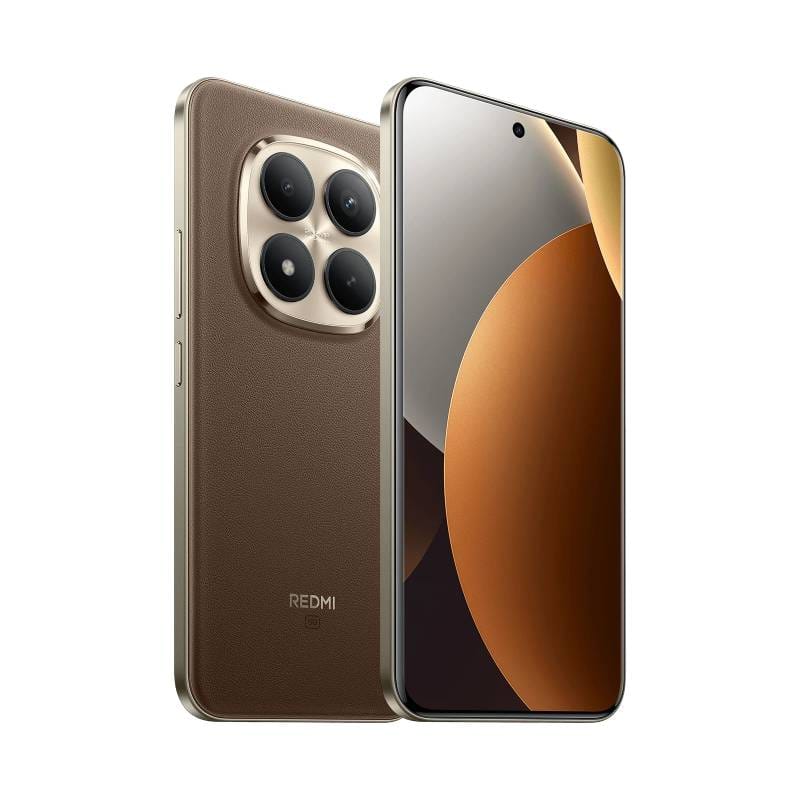
The Redmi Note 15 Pro+ 5G is the sweet-spot option in this guide. Its battery is smaller than the POCO’s, but still very large by normal standards at 6500mAh, and Xiaomi explicitly says it uses 10% silicon-carbon content to boost capacity. It also gets 100W HyperCharge, a 6-year long-life battery claim, a 6.83-inch 1.5K AMOLED display, Snapdragon 7s Gen 4, Xiaomi IceLoop cooling, REDMI Titan Structure, Gorilla Glass Victus 2, and very aggressive IP66/IP68/IP69/IP69K durability ratings. On top of that, it gives you the strongest camera package in this article with a 200MP OIS main camera and a larger 1/1.4-inch sensor. [7]
From a buyer’s perspective, this is the model that feels most balanced. It is meant for the person who wants clearly better stamina than an older mid-range phone, but still cares about the display, camera quality, fast top-ups and everyday polish. PhoneArena’s testing showed strong browsing endurance and a full charge in under an hour, while Notebookcheck also found battery life very good in its practical Wi-Fi test. In other words, it is not just a spec-sheet winner; it is built to survive a demanding day and recover quickly when you do need to charge.
It is not perfect. Some reviews have pointed to UFS 2.2 storage, the occasional stutter and HyperOS friction as reminders that this is still a mid-ranger rather than a true flagship. But if you want a phone that blends silicon-carbon battery benefits with proper fast charging, a high-quality screen, notable toughness and the best camera credentials of these three, the Redmi Note 15 Pro+ 5G makes a very strong case.
Why this pick
✅ Pros:
- Strong all-round package: 6500mAh silicon-carbon battery, 100W charging, a sharp AMOLED display and a 200MP OIS main camera.
- Excellent toughness and travel-friendly extras, including Titan Structure, IceLoop cooling and very strong ingress protection.
- Better day-to-day balance than a pure battery brute, with long security support from Xiaomi.
⛔ Cons:
- HyperOS, UFS 2.2 storage and merely mid-range performance stop it feeling truly premium.
Main standout feature:
This is the sweet-spot phone here because it combines the new battery tech with genuinely fast charging and a feature set that feels broader than a typical battery-first mid-ranger. You are not only buying more stamina; you are buying a better camera, tougher build and stronger overall daily usability too.
Who it’s best for:
UK buyers who want strong battery life but do not want a one-dimensional endurance phone. It suits commuters, students, content creators, everyday photographers and heavy users who still care about display quality and fast charging.
Amazon UK Check: 👉 Check price on Amazon UK – The Redmi Note 15 Pro+ 5G is the middle pick in this guide for good reason: it gives you modern silicon-carbon battery gains, much faster charging than most mid-range phones, and a stronger camera story than the budget Redmi. It is worth checking Amazon UK for the latest live deal because storage, colour and charger bundle details can change the value equation quite a bit.
Redmi 15 5G – Best budget silicon-carbon battery phone
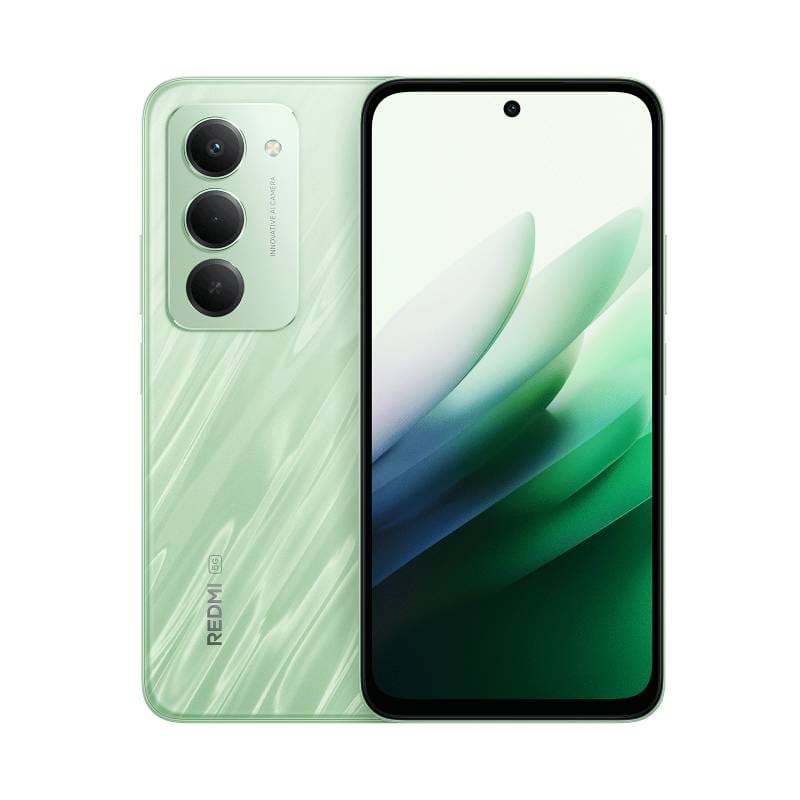
If your budget matters more than having the most premium display or the most powerful chip, the Redmi 15 5G is the sensible entry point into this new battery trend. Xiaomi gives it a 7000mAh “Xiaomi Surge Battery” driven by advanced silicon-carbon anode technology, with claimed 2.26-day use, 25 hours of video playback and 108 hours of music playback. You also get 33W wired charging, 18W reverse charging, a 6.9-inch FHD+ 144Hz display, Snapdragon 6s Gen 3, 5G support, 50MP main camera, microSD expansion up to 2TB, and Xiaomi HyperOS 2.[9] Xiaomi’s UK FAQ also confirms that the display is LCD rather than AMOLED, and that there is no always-on display or HDR support, which is worth knowing before you buy. [8]
What makes the Redmi 15 5G appealing is not glamour but usefulness. Notebookcheck called it a runtime-focused phone whose clear priority is the best possible battery life at the lowest possible price. In testing, it delivered 21 hours 07 minutes of Wi-Fi web surfing and 29 hours 44 minutes of video playback, which is excellent for a cheap 5G handset. That makes it a very practical option for students, shift workers, delivery drivers, anyone using lots of navigation, or people who simply want a phone that survives long days without drama. [9]
The compromise is obvious: this is not a performance phone. Notebookcheck found demanding games only casually playable, and the slower 33W charging means a full refill of that huge battery can take a long time. The big 6.9-inch LCD is useful, but it is not as rich or power-efficient in dark content as the AMOLED panels on the other two picks. Still, for buyers who mainly want battery life, 5G and a low entry price, the Redmi 15 5G absolutely earns its place here.
Why this pick
✅ Pros:
- Massive 7000mAh silicon-carbon battery with outstanding endurance for the money.
- Big 144Hz display and expandable storage make it practical for students, media users and work-phone duties.
- Affordable route into modern battery-first phone design, with 5G and reverse charging included.
⛔ Cons:
- Slower 33W charging, modest cameras and only casual gaming performance mean it is very much a budget pick.
Main standout feature:
The Redmi 15 5G proves that silicon-carbon battery gains are not only for pricier phones. Its 7000mAh battery delivers genuinely huge runtime while keeping the phone in a far more affordable bracket than the other two options in this guide.
Who it’s best for:
Budget-focused UK buyers, students, second-phone users, delivery drivers and anyone who mostly wants stamina for maps, calls, streaming and messaging rather than premium photography or high-end gaming.
Amazon UK Check: 👉 Check price on Amazon UK – The Redmi 15 5G is the value-led option in this guide, and that is exactly why it makes sense to check the live Amazon UK listing before you buy. Storage variants, included extras and charger requirements can all affect the real bargain, so compare the current deal carefully rather than judging it only by the headline model name.
Check our website: for more details about Xiaomi Redmi 15 5G
Comparison Table
|
FEATURE |
POCO X8 Pro Max |
Redmi Note 15 Pro+ 5G |
Redmi 15 5G |
|
Battery capacity |
8500mAh |
6500mAh |
7000mAh |
|
Silicon-carbon battery details |
16%
silicon-carbon, 847Wh/L energy density, 6-year/1600-cycle battery claim |
10%
silicon-carbon, 6-year long-life battery claim |
Advanced
silicon-carbon anode tech in Xiaomi Surge Battery |
|
Charging speed |
100W
wired, 27W reverse, PPS support |
100W
wired, 22.5W reverse |
33W
wired, 18W reverse |
|
Processor |
MediaTek
Dimensity 9500s, 3nm |
Snapdragon
7s Gen 4, 4nm |
Snapdragon
6s Gen 3, 6nm |
|
Display |
6.83"
1.5K 120Hz AMOLED |
6.83"
1.5K 120Hz AMOLED |
6.9"
FHD+ 144Hz LCD |
|
Real-world endurance strength |
Best
in guide; a true 2-day heavy-use phone, with even longer possible on lighter
use |
Strong
all-day heavy use, with second-day potential for lighter users |
Excellent
budget stamina, especially for video, web and general daily work |
|
Best battery use case |
Gaming,
travel, hotspotting, filming, long shifts |
All-round
heavy use with much faster top-ups and better camera balance |
Calls,
maps, study, streaming, work-phone duties |
|
Camera strength |
Good
main camera, secondary setup is basic |
Strongest
camera package here, led by a 200MP OIS main camera |
Basic
but usable 50MP setup |
|
Gaming / heavy-use suitability |
Best
here |
Good
for mainstream gaming; not enthusiast-level |
Fine
for casual gaming only |
|
Software experience |
HyperOS
3; feature-rich, not the cleanest |
HyperOS
2; lots of features, some software/storage compromises |
HyperOS
2; decent longevity, but some pre-installed clutter |
|
Typical UK buyer profile |
Heavy
users who hate charging |
Mid-range
buyers wanting balance |
Budget
buyers chasing runtime |
|
Best for |
Best
overall silicon-carbon battery monster |
Best
mid-range silicon-carbon phone |
Best
budget silicon-carbon battery phone |
POCO X8 Pro Max → Check price on Amazon UK
Redmi Note 15 Pro+ 5G → Check price on Amazon UK
Redmi 15 5G → Check price on Amazon UK
What to Consider Before Buying a Silicon-Carbon Battery Phone
- Bigger battery, but still a bigger phone: Silicon-carbon batteries help brands fit unusually large capacities into handsets that are still mainstream in shape, but there is still a size and weight trade-off. The POCO X8 Pro Max is 218g, the Redmi Note 15 Pro+ 5G is about 207g, and the Redmi 15 5G is 217g, so none of these is a compact phone.
- Capacity versus actual battery life: Do not assume the biggest mAh figure is always the best fit. The POCO wins outright endurance, but the Redmi Note 15 Pro+ 5G may feel better balanced if you care about camera quality and very fast charging, while the Redmi 15 5G is the cheapest route to excellent stamina.
- Charging speed and charger compatibility matter: The POCO’s 100W PPS support is excellent, the Redmi Note 15 Pro+ 5G is also properly fast, and the Redmi 15 5G is much slower at 33W. Check the Amazon UK listing carefully, because charger inclusion varies by model, region and seller, and that changes the real cost of ownership.
- Heat still matters: Fast charging is only a win if the phone manages heat sensibly. That is why features like smart charging, battery protection and dedicated cooling are worth paying attention to, especially if you game heavily or top up in short bursts all the time.
- Screen type changes the experience: The two pricier models use 1.5K AMOLED panels, which are better for media and generally feel more premium. The Redmi 15 5G’s huge 144Hz LCD is fine for budget use, but it lacks always-on display and HDR support, so it is the least rich screen here despite still being large and smooth.
- Think like a UK buyer at checkout: Confirm storage, colour, seller, charger bundle, warranty wording and return terms before paying. Xiaomi UK publishes support contacts and formal warranty/return information, and marketplace listings can differ in important details even when the phone name looks identical.
Frequently Asked Questions
What is a silicon-carbon battery in a phone?
It is still a lithium-ion battery, but it uses a silicon-based anode system with carbon to fit more energy into the same space than older graphite-led designs.
Are silicon-carbon batteries better than normal lithium-ion batteries?
They can be better for energy density and packaging efficiency, but actual battery life still depends on the chip, screen, software and cooling too.
Do silicon-carbon battery phones last longer?
Usually yes, especially when brands use the tech to deliver genuinely larger batteries, which is exactly what all three phones in this guide do.
Is faster charging bad for battery health?
Not automatically. Modern charging systems use thermal controls and battery protection features, but heat management and sensible charging habits still matter over time.
Which of these three phones is best for heavy users?
The POCO X8 Pro Max is the best choice for very heavy users because it combines the largest battery here with the strongest performance and the most convincing all-round battery experience.
Final Verdict
- POCO X8 Pro Max is the best choice for buyers who want the biggest battery headline and the strongest all-round silicon-carbon battery experience → Check price on Amazon UK
- Redmi Note 15 Pro+ 5G is the best mid-range option for buyers who want strong battery life, fast charging and good value without paying flagship prices → Check price on Amazon UK
- Redmi 15 5G is the best budget choice for buyers who want modern silicon-carbon battery benefits at a more affordable price → Check price on Amazon UK
All three phones make sense for UK buyers who want less charging and more practical stamina; the right one simply depends on whether you prioritise absolute endurance, mid-range balance or the lowest upfront cost.
Thank you for reading!
- ChoiceWise Team