
Cutting-Edge VR Headsets for Christmas for Tech-Savvy Gamers

Looking for an unforgettable Christmas gift for a tech-savvy gamer in the UK? Virtual Reality has never been more exciting. In late 2025, VR headsets span from powerful all-in-one devices to high-end PC rigs and console exclusives. Below we break down the most advanced consumer and enthusiast-grade VR headsets available in the UK, with key features, specs, prices, and who they’re best for. We’ll compare wireless standalone models, PC-tethered headsets, and console VR, then offer a side-by-side spec table and specific gift recommendations. Let’s dive into the VR options that will thrill any gamer this Christmas!
Standalone (All-in-One) VR Headsets
Standalone VR headsets include everything needed to play (built-in processors and displays), with no PC or console required. They’re wire-free and great for room-scale experiences, and many can also connect to a PC for advanced use. Here are the top all-in-one headsets:
Meta Quest 3 – Best All-In-One VR Headset Overall
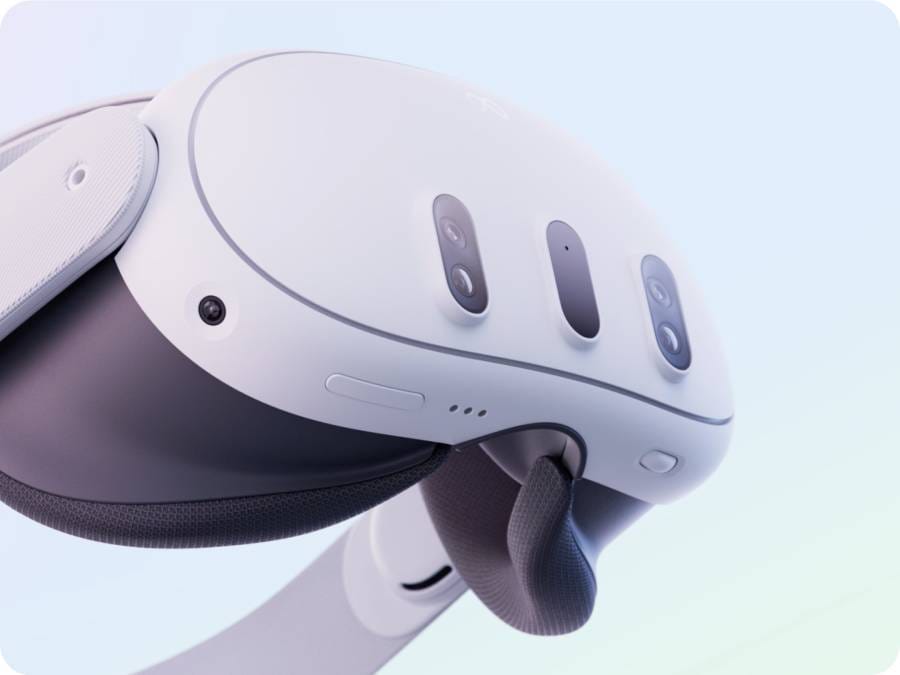
Meta Quest 3 is the newest mainstream VR headset and a huge leap forward from its predecessor. It’s an entirely standalone device (no wires or base stations needed) running on the Snapdragon XR2 Gen 2 chip for double the GPU power of Quest 2. Quest 3 features high-resolution 2064×2208 per-eye displays and supports refresh rates up to 120 Hz for smooth visuals. The field of view (FOV) is around 110°, noticeably wider than Quest 2[1]. This means a more immersive image filling your vision.
Importantly, Quest 3 offers full-colour mixed reality passthrough, letting you see your real environment in color and overlay AR objects. This opens up fun mixed-reality games and experiences. The headset uses inside-out tracking via built-in cameras (no external sensors) to track your movement in 6DoF space. The updated Touch Plus controllers were redesigned without tracking rings, using onboard cameras for precise tracking. They also provide improved haptics for more immersive feedback. Quest 3 is backwards compatible with the extensive Quest 2 library, so there’s a huge catalog of games available from day one. Battery life is the only minor downside – about 2–3 hours per charge when used wirelessly[2], so expect to recharge between long play sessions.
Comfort and design: The Quest 3 is more compact and lighter (~515g) than prior models, with a solid strap (though some users invest in an elite strap for even better weight balance). It’s front-heavy but still comfortable for most medium-length sessions. The facial interface has been improved for a better fit and wider IPD adjustment range (to align lenses to your eyes).
Ecosystem: Quest 3 runs Meta’s Quest Store with hundreds of games and apps, and can also tether to a PC (via Oculus Link cable or Air Link wireless) to play PC VR titles (SteamVR/Oculus Rift libraries). This makes it extremely versatile – standalone convenience for casual gaming, and PC VR capability for high-end experiences.
Price (UK): The Quest 3 starts around £480 for the 128GB model (and about £620 for the 512GB version at launch). By Christmas 2025, you may find bundle deals (some retailers have included popular games or accessories) or slight discounts – for example, recent sales have seen the 128GB version around £369–£479. It’s a significant price bump over the older Quest 2, but still far cheaper than ultra-high-end headsets. Considering its technology, Meta Quest 3 is the best all-around VR headset for most people: it offers a great balance of high-quality visuals, ease of use, and an expansive content library, making it an easy recommendation for newcomers and seasoned VR gamers alike.
Typical use cases: The Quest 3 is ideal for casual to hardcore gaming in VR without any fuss – from Beat Saber workouts to immersive RPGs – as well as social VR (e.g. VR Chat, Horizon Worlds) and light productivity or creative apps. Its mixed reality mode can even enable fun room-scale experiences or fitness games in your living room with visual awareness of your surroundings. If the gamer on your list doesn’t have a powerful PC or prefers the freedom of wireless VR, the Quest 3 is the top pick.
Meta Quest Pro – High-End Standalone with Premium Features
[3] Meta Quest Pro is Meta’s premium VR/MR headset initially aimed at professionals and enthusiasts. It’s a standalone headset like Quest 3 but with some advanced features: notably, it includes eye tracking and face tracking sensors for more natural social interactions (your avatar can mimic your eye movements and facial expressions). It has a slightly lower display resolution than Quest 3 (about 1920×1800 per eye), using quantum-dot mini-LED LCD panels. The visuals are still crisp with rich colours and 75% higher contrast than Quest 2. The Quest Pro runs at 90 Hz refresh (no 120 Hz mode)[4] and has a ~106° FOV, offering an immersive view.
Where the Quest Pro shines is design and comfort: it features a sleek halo-style headstrap with a rear battery, giving it excellent balance. At ~722g (1.6 lbs) it sounds heavy, but the weight is distributed so well that many find it very comfortable for longer sessions. The front optics use pancake lenses, making the visor slim. The headset doesn’t fully enclose your face – it intentionally lets some real-world peripheral vision, which is useful for mixed reality (though you can attach partial light blockers for more immersion in VR).
The Touch Pro controllers are arguably the best VR controllers currently – they have no tracking rings, instead each contains three cameras for self-tracking. They’re rechargeable (dock included) and feature improved haptics (TruTouch) and even pressure-sensitive stylus tips for writing on virtual surfaces. Hand tracking on Quest Pro is also improved and quite usable for menu navigation or simple games.
Quest Pro also offers full-colour passthrough for mixed reality, allowing AR productivity apps or simply seeing your surroundings without removing the headset. Its powerful Snapdragon XR2+ chip and 12GB RAM let it multi-task and run more complex environments (e.g. you can spawn multiple virtual monitors for work).
Who is it for? With its initial price of £1,299 (now often around £900 or less due to price cuts), the Quest Pro is a tough sell purely for gaming – especially with Quest 3’s release. However, for a VR enthusiast or tech professional, it can be a great gift. It’s “best for comfort” according to some reviews, and is suited for longer sessions, social VR, creative work, and mixed reality collaboration. Gamers who value cutting-edge features (like eye-tracked foveated rendering, expressive avatars, and the deluxe controllers) will appreciate the Quest Pro. Keep in mind the battery life is only about 1–2 hours standalone[5], so using it tethered or taking charging breaks is common for extended play.
UK Price: Meta Quest Pro has dropped in price from its £1,499 launch to roughly £800–£999 in late 2025 (various retailers list it around this range). It often comes bundled with the charging dock and sometimes free software. For holiday shoppers, watch for further discounts or refurbished units – it’s pricey, but it delivers a premium VR experience for those willing to invest.
HTC Vive XR Elite – Compact Mixed Reality Headset
HTC Vive XR Elite is HTC’s flagship all-in-one headset, notable for its compact, modular design. The XR Elite can operate as a standalone VR/MR headset (running Android-based Vive software) or be connected to a PC to play SteamVR content. It features 1920×1920 per-eye resolution LCDs, up to 90 Hz refresh, and about 110° FOV, comparable to Quest 2/3 in clarity and field of view. One standout aspect is its form factor: you can detach the battery strap and use it like goggles (weighing only ~240g) with a cable to an external battery pack, making it super lightweight on your head for short sessions. With the battery cradle attached at the back, it’s around 625g – still lighter than most headsets, and balanced.
The XR Elite supports color passthrough mixed reality as well, similar to Quest, enabling AR overlays on your room. It has diopter dials for lens focus (great for users who wear glasses – you may not need them). It uses inside-out tracking (4 cameras) for positional tracking and comes with HTC’s motion controllers (similar to older Vive Focus 3 style controllers with tracking rings).
Use cases: This headset is geared toward both VR gaming and mixed reality experiences. It’s a strong choice for someone who dislikes the bulk of typical VR headsets – its “glasses-like” mode is the closest to ski goggles style we’ve seen in a consumer device. Gamers can enjoy wire-free play or stream PC VR games wirelessly. It’s also a decent travel VR device due to its smaller size (it even folds somewhat and has a carrying case).
Price (UK): The Vive XR Elite launched at £1,299, but HTC has since done aggressive discounts. As of Black Friday 2025, it has been seen for £549–£799 on sale, a huge drop that makes it quite tempting. At ~£600 it’s competitive with Quest Pro, offering similar features (though lacking face/eye tracking unless you buy separate add-ons). If you’re gifting to a VR user who values comfort and flexibility (standalone + PC hybrid) and isn’t tied to Meta’s ecosystem, the XR Elite is a worthy option.
Tip: Check if holiday bundles include HTC’s Face Tracker or Eye Tracker add-ons for XR Elite – these can enhance social VR by capturing facial expressions and gaze (sold separately, typically). Also ensure you get the controllers and battery cradle in the box (some enterprise packages differ). For most, the standard consumer bundle with controllers and battery is the way to go.
Pico 4 – Affordable Standalone Alternative
For those who want an all-in-one VR headset but prefer not to go with Meta, the Pico 4 is a solid alternative. Pico 4 (by ByteDance) is a standalone headset with specs similar to Quest 2/Quest 3 era: it has 2160×2160 per eye resolution LCD displays and runs at 72Hz or 90Hz refresh. The FOV is about 105° (with pancake lenses), delivering a crisp 4K-ish image. It’s powered by the Snapdragon XR2 (Gen1) chip and 8GB RAM, so not as powerful as Quest 3’s newer chip, but it handles most VR games well. The Pico 4 features inside-out 6DoF tracking and comes with two motion controllers (very much like Oculus Touch controllers with tracking rings). It also offers full-color passthrough for basic mixed reality functions.
The Pico 4’s design is sleek and lightweight (≈586g). The battery is in the back of the strap, giving it a nice balance on the head. Comfort-wise it’s pretty good, though the strap isn’t as plush as some competitors. One caveat: the Pico 4 lacks an audio jack for private listening (it relies on built-in speakers), but the spatial audio is decent.
Ecosystem: Pico has its own app store with many popular VR games. While not as expansive as Meta’s library, it covers a lot of ground (and some indie titles not on Quest). Additionally, Pico 4 can connect to a PC for SteamVR gaming, similar to Quest’s PC Link. Where it falls short is in mixed reality – it doesn’t have the advanced scene understanding that Quest 3 has for MR; its passthrough is a bit grainy. But for pure VR gaming, it’s very capable.
Price (UK): Pico 4 is attractively priced – as of late 2025, it starts around £339–£379 for the 128GB model. It undercuts the Quest 3, making it one of the most affordable 4K VR headsets. This lower price is great for budget-conscious shoppers. However, note that Pico 4 is officially sold in the UK/EU but not in North America, so it’s tailored to markets like the UK. If the gamer you’re buying for is wary of Meta/Facebook accounts, Pico 4 is a privacy-friendly option (no Facebook login needed).
Summary: The Pico 4 is best for casual VR gamers or families who want a high-resolution headset at a lower price. It’s great for fitness games, social VR, and immersive gaming, just like Quest. While it may not have the absolute latest chip or the sheer number of exclusives, it covers all the bases for a fun VR experience. It’s an excellent entry point into VR and a nice gift when paired with some family-friendly games. (Keep an eye out for any Pico holiday bundles – sometimes they pack in accessories or games.)
PC-Tethered VR Headsets (High-End Enthusiast Options)
For gamers who have a powerful gaming PC (or those you really want to spoil!), PC-tethered VR headsets can push the limits of fidelity. These headsets connect to a computer (typically via cable or dedicated wireless adapter) and leverage the PC’s GPU to deliver top-notch graphics. Enthusiast-grade models often have superior displays, higher refresh rates, and in some cases external tracking (like base stations) for the most precise tracking and controller responsiveness. Here are the leading PC VR headsets in late 2025:
Valve Index – Best for PC Gamers (Balanced Performance & Tracking)
Valve’s Index has been a gold standard for PC VR since its release and remains a top pick for serious PC gamers. The Valve Index is a tethered headset known for its excellent tracking and controllers. It uses external “Lighthouse” base stations (SteamVR 2.0 tracking) to track your head and the controllers with sub-millimeter precision and virtually no latency. This outside-in tracking setup means you’ll need to mount two small base sensors in your room, but the pay-off is rock-solid performance – ideal for fast-paced and competitive VR gaming.
In terms of visuals, Index has dual LCD displays at 1440×1600 per eye resolution, with an ultra-fluid 120Hz default refresh (up to 144Hz max). The combination of high refresh and wider 130° FOV gives a notably immersive experience – you get a broad view and smooth motion, which can reduce motion sickness and give an edge in reaction times. The resolution is lower than newer headsets (not “4K” per eye), but it’s still sharp and the colors/contrast are good (albeit not OLED-deep blacks). Many Index users value its reliable performance and comfort over pure pixel count. The Index has adjustable lens distance and a comfortable rigid head strap with top strap and dial tightener – it’s built for longer sessions.
The Index controllers, nicknamed “Knuckles”, are a highlight. They strap onto your hands and allow individual finger tracking – you can open your hand and drop/grab objects naturally. These controllers make games like Half-Life: Alyx shine, as you can intuitively interact with the environment. They also have analog sticks, buttons, and a pressure-sensing grip. Valve’s built-in audio solution is excellent too: the headset has off-ear speakers that hover near your ears, providing immersive, high-quality sound without headphones (and your ears don’t get sweaty).
Use cases: Index is perfect for the PC gamer who plays VR sims, shooters, and room-scale experiences. Titles like Pavlov, Beat Saber, and flight/racing sims benefit from its tracking and refresh rate. It’s also beloved by the modding community and supports all SteamVR games natively. If the person you’re gifting loves to tinker, the Index is very PC-friendly and expandable (you can swap face pads, add the Valve “Frunk” accessories, etc.).
Price (UK): The full Valve Index kit (headset, controllers, 2 base stations) retails around £919 (Valve’s Steam store listing). This hasn’t changed much, though holiday sales sometimes throw in free games or slight discounts. You can also buy components separately (headset-only ~£499, controllers ~£279, etc.). For someone who already has Vive base stations or controllers, they could get just the parts needed. But as a gift, the full kit is the straightforward option. It’s pricey, but you’re paying for premium build and the best tracking in the industry.
Do note: Valve’s next-gen headset (codenamed “Steam Frame/Deckard”) is rumored for 2026, but as of Christmas 2025 the Index is still the flagship available. It’s a testament to how well-rounded it is that, even a few years on, it’s considered one of the best VR headsets for PC gaming – especially for those who value performance and a full-room VR setup.
HTC Vive Pro 2 – Best High-Resolution PC VR for Pros
If sheer resolution is the goal, HTC’s Vive Pro 2 is worth a look. The Vive Pro 2 is a PC-tethered headset that boasts a 5K resolution – specifically 2448×2448 per eye LCD panels. That’s significantly higher pixel count than Index, giving a very sharp image (ideal for reading gauges in simulators or admiring game details). It also supports 120Hz refresh rate for smooth motion. The FOV is around 120° (diagonal), which is quite wide and immersive. This headset uses the same Lighthouse external tracking as Valve Index (so it’s very precise), and is compatible with SteamVR controllers. Many bundles come with the Vive wand controllers and base stations, but you can also use Valve’s Knuckles controllers or other SteamVR accessories with it interchangeably.
The Vive Pro 2 is essentially HTC’s high-end upgrade over the original Vive/Pro series – it’s built for enthusiasts and enterprise users who need high-res visuals. It has a comfortable padded head strap (similar “halo” style to the original Vive Pro) with a tightening dial, and built-in headphones for spatial audio. One advantage: it has a manual IPD dial to adjust lens spacing. It also supports Vive’s modular add-ons – e.g. the Wireless Adapter (so you can use it untethered on PC, though that extra hardware is costly) and eye-tracking add-ons (for enterprise).
Image quality: The 5K detail is superb – text and distant objects appear clearer than on Index or Quest. Colors and contrast are good, though some reviewers noted the lenses can introduce some edge blur and a narrower sweet spot (typical for Fresnel lenses). Still, if your gamer giftee is a flight sim or racing sim fanatic, they will appreciate the clarity for spotting far-off objects or reading fine text in cockpits.
Price (UK): The Vive Pro 2 (headset-only) launched at around £719, and the full kit with controllers and base stations was about £1,299. Nowadays you can often find the full kit on sale for roughly £900–£1,000. It’s a direct rival to the Index kit in price, trading off the Index’s better controllers for the Pro 2’s higher resolution. If the person already has base stations from a Vive or Index, you could gift just the headset. Make sure to check for any holiday bundles – HTC sometimes includes software or adapters as incentives.
Who it’s for: Hardcore PC VR enthusiasts who prioritize display quality over everything. It’s the “best high-resolution VR headset” in many rankings when it comes to consumer PC VR. Also, if they are already in the SteamVR ecosystem and perhaps have older HTC gear, the Pro 2 is a natural upgrade. Keep in mind that driving a 5K headset at 120Hz needs a very strong PC (a modern high-end GPU is recommended). For someone with that kind of rig, the Vive Pro 2 can truly shine.
Pimax Crystal – Ultra-Clarity Enthusiast VR (PC and Standalone)
For the ultimate display enthusiasts, Pimax Crystal is a beast of a headset delivering “ultra-clear” VR experiences. Pimax is known for pushing specs to the extreme, and the Crystal is no exception: it features 2880×2880 pixels per eye – one of the highest resolutions in any consumer headset – through custom low-persistence LCD panels with local dimming for improved contrast. The Crystal’s pixel density is about 35 PPD (pixels-per-degree), meaning incredibly sharp visuals (fine text and distant details are crisp). It supports multiple refresh rates (72Hz, 90Hz, 120Hz, and even experimental 160Hz in some modes), so you can balance frame rate vs. quality. The field of view is 120° (horizontal) by default, expandable to ~140° with optional lens swaps – not as ultra-wide as older Pimax “wide FOV” models, but still above average FOV.
Interestingly, Pimax Crystal is a hybrid: it can work as a PC VR headset (DisplayPort connection) or as a standalone headset. It has a Snapdragon XR2 chip internally for standalone “AIO mode”, though in practice its standalone library is limited compared to Quest/Pico. Most owners use it tethered for PC gaming or simulators, where it truly excels. It also has inside-out tracking with 4 on-board cameras and can optionally support external Lighthouse tracking. So you get flexibility: use the built-in optical tracking (convenient, though not as perfect as Lighthouse) or if you’re an extreme enthusiast, use SteamVR base stations for maximal precision. The included Pimax controllers are similar to Quest’s (with tracking rings); they’re functional but not as advanced as Index or Touch Pro controllers.
Image and build: The Crystal is fairly heavy (~960g); it’s front-heavy due to the glass aspheric lenses and big displays. Extended wear can be fatiguing, though the headstrap is adjustable and padded, and a counter-balance battery at the back helps. It has a removable battery system – two batteries that you can hot-swap for continuous use. It also features automatic IPD adjustment using eye tracking: when you put it on, motors move the lenses to match your eye distance[6]. The eye tracking also enables dynamic foveated rendering, a technique to improve performance by rendering the center of your gaze in full resolution.
Audio: Pimax includes off-ear speakers (DMAS audio) that provide decent spatial sound. And if you prefer, there’s a 3.5mm jack for your own headphones.
Use cases: Pimax Crystal is a dream for sim racers, flight sim pilots, and anyone who demands top visual fidelity. Microsoft Flight Simulator, DCS World, Assetto Corsa Competizione – these are the kinds of titles enthusiast users play on the Crystal, marveling at the detail. It’s also great for immersive cinematic experiences because of the clarity and colors. However, the trade-offs are its bulk and the need for a very powerful PC to drive it at native res. It’s truly an enthusiast-grade device (and Pimax’s software can be a bit technical to tinker with).
Price (UK): Pimax Crystal starts at $1,599 (approx £1,300–£1,400) for the base package. Pimax sells directly online, often with free shipping to UK/EU. They have introduced variants like a cheaper “Crystal Light” (lower price, slightly different spec) and forthcoming “Crystal Super” with micro-OLED, but for late 2025 the main Crystal is the flagship. At this price, it’s not cheap – similar to buying a high-end gaming PC just for the headset. This is really for the VR connoisseur on your list. If that person has been talking about wanting the clearest VR or has a dedicated sim rig, the Pimax Crystal will undoubtedly impress. Just be prepared to help with setup on Christmas morning, as Pimax devices sometimes require more tweaking than mainstream headsets.
Varjo Aero – Professional-Grade Clarity for VR Simmers
Varjo is a Finnish company known for ultra-high-end enterprise headsets, but the Varjo Aero was their attempt to bring that pro-level fidelity to enthusiasts (at a relatively accessible price). The Varjo Aero features dual mini-LED displays with a 35 ppd peak resolution – roughly 2880×2720 per eye – and top-notch aspheric lenses. Its visuals are often described as “retina-quality” in the sweet spot, virtually eliminating screen-door effect and god-rays thanks to those high-quality lenses and calibration. FOV is about 115° horizontal, and it supports refresh up to 90Hz. The Aero includes advanced 200 Hz eye tracking with automatic IPD adjustment – put it on and it sets the lenses perfectly for your eyes. This also allows foveated rendering support, helping performance by focusing resolution where you look.
Designed initially at $1,990, Varjo permanently cut the Aero’s price to $990 (~£900) in mid-2023 to compete. It’s a tethered PC VR headset using SteamVR tracking (Lighthouse base stations required, not included). You can pair it with Valve controllers or others – it’s basically a high-end display that leverages the SteamVR ecosystem for tracking and input. Comfort is excellent: Varjo engineered a 3-point head strap with a cushioned counterweight and even active cooling fans. The result is a headset many consider one of the most comfortable for long-duration use (suitable for multi-hour flight sim sessions). At ~ color-calibrated 150 nits brightness and >95% DCI-P3 color, the Aero’s image is vivid and true-to-life.
One catch: as of late 2025, Varjo has discontinued the Aero in favor of their new enterprise XR-4 line. That means official sales might be limited to remaining stock. However, if you can find one (some retailers or Varjo’s site might still have units), it’s a worthy gift for a serious flight/racing sim enthusiast or VR creator. They’ll get near-Varjo-Enterprise clarity without the subscription fees Varjo usually requires for pro products (Aero has no ongoing fee).
Use cases: The Aero is often dubbed a “VR simmer’s dream” – for apps like Microsoft Flight Simulator, X-Plane, DCS, iRacing, etc., where clarity of instruments and distant objects is paramount, the Aero excels. It’s also fantastic for virtual desktop/work usage due to the text clarity (some use it as a giant virtual monitor setup). And because it’s so comfortable and has passive cooling (less sweat, lenses won’t fog thanks to vent design), it encourages extended use.
Price (UK): ~£1,000 (if available). It used to be €2,000, then dropped to €1,000. Keep in mind you need base stations (~£150 each) and controllers if you don’t have them, which can add a few hundred pounds. So the full setup might run close to £1.3k–£1.5k. If your gift budget stretches that far and you know the person has the PC to power it, the Aero can be an incredible surprise. Otherwise, consider that some newer headsets (like the Pimax Crystal above) also target similar visual quality with different trade-offs.
Bigscreen Beyond – Ultralight PC VR for Extended Play
[7] One of the most unique new headsets is Bigscreen Beyond, built by the makers of the Bigscreen VR app. The Beyond is all about being small and light while still delivering high-end visuals. How light? It weighs only ~170 g (under 6 ounces) with head strap – literally the size of a pair of ski goggles. After wrestling with 500–900g headsets, wearing the Beyond feels almost like nothing – it’s designed so that you can game for hours without neck strain.
Despite its tiny form, the Beyond packs dual 2560×2560 per-eye micro-OLED displays at up to 90Hz. The pixel density is very high (~32 PPD) giving a clear image with rich colors and true blacks (thanks to OLED). The FOV is around 95–102° diagonal – slightly lower than Index or Quest, but still a decent, immersive view (the exact FOV depends on your face fit). Bigscreen achieves this with pancake lenses custom-fitted for each user: when you order, they require a 3D face scan to make a custom facial interface that perfectly aligns the optics to your eyes. This maximizes comfort and visual clarity for each individual. It’s a very bespoke approach, and it means no IPD dial – the headset is built to your IPD.
Beyond uses SteamVR Lighthouse tracking, so you’ll need base stations and controllers (sold separately). It has no inside-out cameras or passthrough – it’s a pure VR visor. There’s also no built-in audio; initially you must use your own headphones or earbuds. (Bigscreen has since developed a deluxe audio strap with built-in off-ear speakers, which may be shipping by holiday season – check if that’s included or an add-on). The Beyond connects to PC via a thin cable (DisplayPort + USB). Because of its size, it’s very portable – easy to throw in a bag for travel.
Use cases: Bigscreen Beyond is fantastic for long gaming sessions, sim racing, or any scenario where headset weight is a big factor. Competitive VR gamers (e.g. in VR esports) might love it since you can move quickly with less inertia on your head. The visuals, while not the absolute highest resolution on the market, are comparable to or better than Index and Quest Pro in clarity, with OLED contrast that makes dark game scenes or space sims look great. The main limitation is its narrower FOV and lack of AR passthrough – it’s laser-focused on seated/standing VR gaming in a controlled space.
Price (UK): Around $1,000 / £999 for the headset (pre-order from Bigscreen’s website). Note that does not include base stations (£149 each) or controllers. If the person already has a Vive or Index, they can reuse those. Otherwise, a full kit (Beyond + 2 SteamVR base stations + controllers) runs about $1,580 (per RoadtoVR) – roughly £1,300. That’s in line with other high-end setups. Bigscreen has been shipping units through 2024, and by Jan 2025 they even announced a Beyond 2 with minor improvements (slightly wider FOV ~102°, adjustable IPD) shipping early 2026. For Christmas 2025, the original Beyond is the one available (and it’s already a compelling product).
Who it’s for: a PC VR enthusiast who already has the VR infrastructure (or doesn’t mind setting it up), and who values comfort to the extreme. If you hear complaints about headsets being heavy or uncomfortable, Beyond is the answer. It’s also a cool gift for someone who loves to be on the cutting-edge of VR hardware – it’s still a niche, early-adopter device with a wow factor due to its size. Just ensure they have (or you also gift) the needed SteamVR tracking gear to use it!
Console VR: PlayStation VR2 for PS5
Last but not least, if your gamer is firmly in the console camp, PlayStation VR2 is the go-to (and only) cutting-edge console VR headset this holiday.
PlayStation VR2 – Best for PlayStation 5 Owners
[8] PSVR2 brings high-end VR to the PlayStation 5. It’s a tethered headset for the PS5 (single USB-C cable to the console) that massively improves on the original PSVR. The specs are impressive: dual OLED HDR displays at 2000×2040 per eye resolution, giving an overall 4K HDR image with deep contrast and vibrant colors. It runs at 90Hz or 120Hz for smooth performance. The FOV is approximately 110° – nice and wide. This means games on PSVR2 look sharp and feel immersive, often rivaling PC VR quality.
PSVR2 features inside-out tracking: four cameras on the headset track your position and the controllers, so no external sensors needed. It also has an IR eye-tracking camera per eye. Eye tracking is used for foveated rendering – the PS5 will render whatever you’re looking at in full detail for better performance. It’s seamless and boosts visual fidelity significantly. The eye tracking also enables some gaze-based interactions in games and menus.
The new PSVR2 Sense controllers are another big leap: they’re like Sony’s take on Oculus Touch, with ergonomic handles, adaptive triggers (which can simulate resistance, e.g. drawing a bow) and haptic feedback in each controller. They also have finger touch detection (so games know when you point or make a fist). These controllers, combined with the headset’s built-in vibration motor, allow for very immersive experiences – e.g., feeling a pulse when something happens in-game. Sony even integrated headset haptics so you might feel a slight rumble on your head during intense moments (like a whoosh when an object flies by in-game).
Comfort-wise, PSVR2 uses a halo band similar to PSVR1, which is generally comfortable and easy to put on/take off. It has a lens separation dial to adjust IPD. The cable is long enough (~4.5m) to allow some movement in your play space without too much tug. The headset also includes earbud headphones (or you can use your own via the 3.5mm jack) for 3D audio.
Content and use cases: PSVR2 is the best choice for console gamers. It unlocks VR versions of big franchises and exclusive titles you can’t play elsewhere – Horizon: Call of the Mountain, Gran Turismo 7 VR, Resident Evil Village VR, No Man’s Sky, and more. Many of the best PS5 games have VR modes or versions on PSVR2. It’s also great for more casual party VR games and cinematic experiences on PS5. Since it’s plug-and-play with the console, there’s no fiddling with PC settings – it just works. That makes it a very user-friendly gift for someone who already owns a PS5. One can sit or stand and enjoy high-fidelity VR from their console.
Price (UK): Launched at £529.99, Sony has since permanently reduced PSVR2 to £399.99, making it much more enticing. Over Black Friday 2025 it even dipped to £299 in some deals, sometimes bundled with a top game. So for Christmas, you might find bundles like “PSVR2 + Horizon VR” around the £400 mark or less. This is great value considering the tech packed inside. Just remember the person needs a PS5 console (which runs ~£450) if they don’t have one – PSVR2 only works with PlayStation 5.
If gifting PSVR2, consider including a game or two. Horizon Call of the Mountain is a visual showcase (often bundled). GT7 is fantastic for racing fans (note a steering wheel controller plus PSVR2 makes an amazing combo gift if budget allows!). Also, Resident Evil 4 VR Mode or Beat Saber can be big hits depending on the gamer’s tastes.
In summary, PlayStation VR2 is the must-have for any PS5 gamer looking to step into VR – it offers some of the highest-quality VR gaming experiences available, optimized by Sony for the console hardware. It’s accessible yet cutting-edge, making it a top recommendation for console-based VR this Christmas.
Ultra-Premium Mixed Reality Headsets
Beyond traditional VR, 2025 has introduced Mixed Reality devices that blend VR and AR – the most famous being Apple’s entrance into the space. These are very high-end and not primarily gaming-focused, but worth mentioning for a truly “cutting-edge” gift consideration:
Apple Vision Pro – The Futuristic “Spatial Computer”
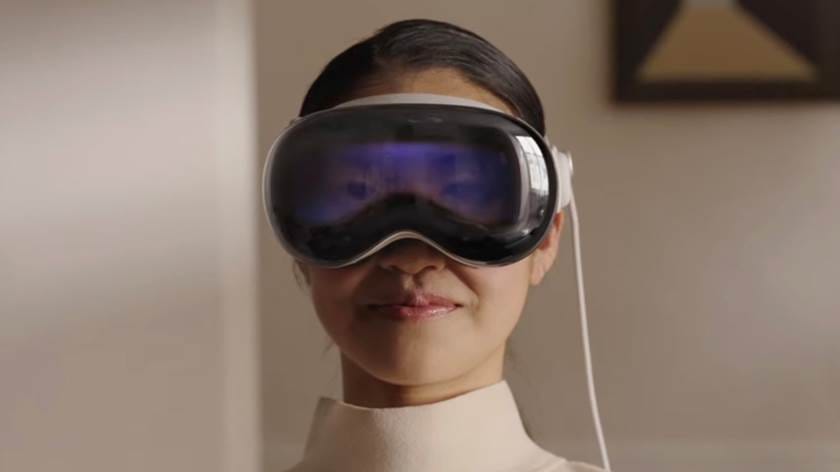
Apple Vision Pro is a mixed reality headset that Apple dubs a “spatial computer”. It is by far the most advanced (and expensive) headset on the consumer market. Vision Pro is not a gaming peripheral in the traditional sense – it’s an ultra-high-end device meant for a wide range of experiences (productivity, communication, media, and some gaming via Apple Arcade). Still, it packs serious tech: dual micro-OLED 4K+ displays (approximately 3660×3200 per eye resolution, ~57 PPD clarity), custom Apple silicon (now upgraded to an M5 chip as of late 2025 models), and an array of cameras and sensors for full-color passthrough and hand/eye tracking. The result is a headset where virtual objects can appear in your real space with uncanny realism, and text is incredibly sharp – no visible screen door effect at all.
Vision Pro’s design is sleek, with a curved glass front and a comfortable padding system (“Light Seal” and adjustable “Dual Knitted” headbands in the new version)[9]. Notably, it has an external display that shows a live view of your eyes to outside observers when you’re in AR mode (so people can see your eyes, making it less isolating). There are no controllers – it’s controlled by eye gaze, hand gestures, and voice. This works impressively well: you look at a UI element and pinch your fingers to click, or flick to scroll.
For VR games, Apple has not positioned Vision Pro as a competitor to Quest or PSVR2 – but it can play Apple Arcade games in a huge virtual screen, and some developers are making immersive experiences for it. Where it excels is virtual screen applications: you can play your PS5 or PC games on a giant virtual 2D screen in the headset, or watch 3D movies, etc., with superb quality.
Use cases: The Vision Pro is best for a tech enthusiast who loves Apple’s ecosystem and wants the bleeding edge AR/VR experience. Think of someone who would enjoy early-adopting a new computing platform – using apps in a spatial way, having video calls with personas, editing photos on a 120” virtual screen, etc. For a gamer, it’s more of a novelty or a secondary device (given limited native game library, aside from some VR exclusives like Disney collaborations or immersive videos). It’s not the go-to for Beat Saber or Half-Life Alyx (those aren’t on it). But it could appeal to a developer or creator interested in building the next gen of AR/VR content – or an Apple lover who has all gadgets and wants this “VR headset of the future.”
Price & Availability (UK): The Vision Pro is £3,499 (base 256GB) in the UK – roughly 7x the cost of a Quest 3. It only just started rolling out internationally in mid-2025. By Christmas 2025, it’s available in UK Apple Stores (with demos bookable). Clearly, this is an ultra-premium gift for a very special someone. Stock is likely limited and Apple requires in-store fitting appointments for purchase because they size the headband and optional prescription lens inserts per user. So if you are considering this as a gift, factor in arranging a demo/fit session for the recipient (perhaps a creative way to surprise them – “we’re going to the Apple Store to pick up your Vision Pro!”).
(Coming Soon) Samsung Galaxy XR – Vision Pro’s Cheaper Rival
(Honourable mention: While not available in the UK until 2026, Samsung’s Galaxy XR headset was unveiled in late 2025 as a mixed reality device aiming to challenge Vision Pro. Priced at $1,799 in the US (about half of Apple’s price), it features 4K micro-OLED displays, eye tracking, hand tracking, and runs Google’s new Android XR platform with Snapdragon XR2+ Gen2 chip. Early impressions praise its bright passthrough and integration of Google services (YouTube, Maps in VR, etc.). The Galaxy XR isn’t on UK shelves this Christmas, but it’s one to watch for next year’s holiday – Samsung plans to launch it in the UK and Europe in 2026. If your tech-savvy gamer loves being first in line, you might tell them about it – but for this Christmas, Meta and Apple have the current MR headsets available.)*
Now that we’ve covered the individual headsets, here’s a side-by-side comparison table of key specs to help you quickly compare:
Comparison Table of Key VR Headset Specs (late 2025 UK)
| Headset (Platform) | Resolution (per eye) | Refresh Rate | Field of View | Tracking | Compatibility | UK Price Range |
| Meta Quest 3 (Standalone) | 2064×2208 LCD | 90Hz (120Hz max) | ~110° diagonal | Inside-out (4 cam) | Standalone (Meta Store); PC via Link/Air Link | ~£480 (128GB); £600 (512GB) |
| Meta Quest Pro (Standalone) | 1920×1800 LCD (mini-LED) | 90Hz | ~106° diagonal | Inside-out (5+ cameras) + Eye/Face tracking | Standalone (Meta); PC via Link/Air Link | ~£800–£999 (256GB) |
| HTC Vive XR Elite (Standalone) | 1920×1920 LCD | 90Hz | ~110° diagonal | Inside-out (4 cam) | Standalone (Vive Port); PC (USB or Wi-Fi) | ~£599–£799 (64GB) |
| Pico 4 (Standalone) | 2160×2160 LCD | 72Hz / 90Hz | 105° diagonal | Inside-out (4 cam) | Standalone (Pico Store); PC (USB/Wi-Fi) | ~£339–£379 (128GB) |
| Valve Index (PC VR) | 1440×1600 LCD | 120Hz (144Hz max) | 130° diagonal | External (2× Lighthouse) | PC (SteamVR) | ~£919 (full kit) |
| HTC Vive Pro 2 (PC VR) | 2448×2448 LCD | 120Hz | 120° diagonal | External (Lighthouse) | PC (SteamVR, Viveport) | ~£900–£1000 (full kit) |
| Pimax Crystal (PC/Standalone) | 2880×2880 LCD | 90Hz (72/120Hz opt.) | 120° horiz. (140° max) | Inside-out (4 cam) + opt. Lighthouse | PC (SteamVR); Standalone (Android) | ~£1300–£1500 (headset) |
| Varjo Aero (PC VR) | ~2880×2720 LCD (mini-LED) | 90Hz | 115° diagonal | External (Lighthouse) | PC (SteamVR) | ~£900 (headset)** † |
| Bigscreen Beyond (PC VR) | 2560×2560 OLED | 75Hz / 90Hz | ~95°–102° diagonal | External (Lighthouse) | PC (SteamVR) | ~£1000 (headset)** |
| PlayStation VR2 (PS5 VR) | 2000×2040 OLED | 90Hz / 120Hz | ~110° diagonal | Inside-out (4 cam) + Eye track | PlayStation 5 console | ~£399 (headset) |
| Apple Vision Pro (MR headset) | ~3660×3200 µOLED | 90Hz (96–100Hz max) | ~100° × 73° (AR view) | Inside-out (12+ cam) + Eye/Hand | Standalone (visionOS) | £3499 (base 256GB) |
Notes: “External (Lighthouse)” tracking means it requires separate base station sensors. Prices marked with ** are headset-only (not including controllers/base stations). Varjo Aero is discontinued (limited stock) as of late 2025. Apple Vision Pro and Samsung Galaxy XR are mixed reality devices with limited gaming libraries compared to dedicated VR headsets.
With the comparisons in mind, let’s highlight the top recommendations for different types of gamers and some Christmas buying tips.
Best Picks & Christmas Buying Considerations
Choosing the right VR headset gift comes down to the gamer’s platform, play style, and your budget. Here are our specific recommendations:
- Best for PC Gamers (Overall): Valve Index – A perfect blend of solid resolution, ultrawide FOV, class-leading tracking and amazing controllers. PC gamers who want a reliable, high-end VR setup for titles on Steam will love this. It’s a bit complex to set up (make sure they have space for base stations), but delivers a premium gaming experience that’s worth the effort.
- Best Display Quality (for Sim Enthusiasts): Pimax Crystal – If the person is into simulators and has a beastly PC, the Crystal’s ultra-high resolution and lens clarity are unmatched. They’ll experience incredibly detailed worlds. Just note it’s heavy and pricey – a luxury pick for the true devotee. Runner-up: Varjo Aero for a slightly lower price (if still available), also offering razor-sharp visuals with pro-grade lenses.
- Best All-In-One (Standalone): Meta Quest 3 – The Quest 3 is the jack-of-all-trades VR headset. No other standalone matches its mix of high-end features, content library, and ease of use. It’s the go-to for newcomers or anyone who values wireless freedom. Perfect for room-scale VR, fitness games, and those without a gaming PC.
- Best for PlayStation 5 Owners: PSVR2 – Transforms a PS5 into a VR powerhouse. Highly recommended if they already have a PS5 – it unlocks unique AAA VR games and top-tier exclusives like Horizon and Gran Turismo that you can’t experience elsewhere. Now at a lower price, it’s an excellent-value gift in 2025.
- Best for Competitive/Long Sessions: Bigscreen Beyond – For the eSports VR player or anyone who plays hours on end, Beyond’s feather-light design is a game-changer. They won’t get tired wearing it, and its OLED visuals are superb. Just double-check they have the required PC and tracking setup. This is a niche but impactful gift for the right person.
- Best Mixed Reality Device: Apple Vision Pro – Only for the most enthusiastic (and deep-pocketed) tech lover. This isn’t a dedicated gaming rig, but rather a peek into the future of AR/VR. As a Christmas gift, it’s the ultimate “wow” for someone invested in Apple’s world or who wants to develop for spatial computing. Ensure you arrange a fitting appointment due to its personalized setup process.
- Best Value Mid-Range VR: Pico 4 – If you want something a bit more affordable than Quest 3 but still modern, Pico 4 is a great choice. For ~£350 you get a standalone 4K headset that can also do PC VR. It’s family-friendly and doesn’t require Facebook accounts. Keep an eye out for any Pico holiday bundles (sometimes they include games or accessories to sweeten the deal).
Christmas Buying Tips:
- Bundle deals: Holiday season often brings bundles – e.g. Quest 3 might come with a free game pack or accessory; PSVR2 might be bundled with a top game (like a racing bundle with GT7). These bundles give extra value, so look out for them at UK retailers. Similarly, Valve sometimes includes software (e.g., Half-Life: Alyx was free with Index kits at one point).
- Warranty and Returns: VR headsets are personal devices (face-fitting, etc.), so ensure the retailer has a reasonable return/exchange policy in case the recipient needs adjustments (for example, headsets like Beyond are custom-made and may have limited return options). Purchasing from official stores or reputable shops (Amazon, Currys, direct from Meta/Sony) can simplify post-purchase support. Sony’s official store and partners had extended holiday return windows last year – useful if you’re buying early.
- Stock and Shipping: Some devices – like Bigscreen Beyond or Pimax – might have lead times. Check if they are in stock for immediate shipping. If a pre-order is required (e.g., custom Bigscreen Beyond units take time), you may need to order well in advance or be prepared to give an IOU. For popular items like Quest 3 or PSVR2, demand is high but they’re generally in stock now. Still, don’t wait too last-minute, especially if you need it delivered before Christmas. Apple Vision Pro requires booking – spots might fill up, so plan accordingly.
- Extra Accessories: Consider what accessories would complement the gift:
· For standalones: perhaps an Elite Strap or battery strap (for Quest 3) to improve comfort, or a travel case to protect it.
· For PSVR2: maybe the Sense controller charging dock, or a PS Store gift card so they can download games.
· For PC headsets: if they don’t have them, base stations or better audio straps could be useful. A high-quality VR mat (for marking play area) or cable management pulley system (for tethered headsets) can also be a nice touch for dedicated setups.
- Cleaning & Hygiene: A set of lens wipes and a spare face cushion (especially a wipeable leather one for fitness games) is thoughtful – VR gets sweaty!
- Game recommendations: Including a couple of games can make the gift immediately fun. For Quest: titles like Beat Saber, Superhot VR, or Myst; for PSVR2: Horizon: Call of the Mountain, Astro Bot Rescue Mission (back-compat), or Resident Evil Village; for PC VR: Half-Life: Alyx (a must-play for high-end VR) or Boneworks/Bonelab, etc. Many stores have holiday sales on VR games, so you can snag a few for less.
- Player’s Space: Make sure the gamer has enough space for the VR you choose. Room-scale titles benefit from a clear 2m x 2m area. If not, they can still enjoy seated or stationary experiences. Consider a swivel chair gift if they’ll mostly sit (great for flight sims or puzzle games).
In conclusion, 2025 offers something for every kind of tech-savvy gamer – from the console loyalist to the PC graphics chaser, from the wireless freedom lover to the mixed reality explorer. A VR headset can truly be a show-stopping Christmas gift, unlocking countless hours of immersive entertainment. Just match the headset to the person’s gaming style and ecosystem, use our table and tips to compare, and you’ll be on track to deliver a holiday surprise that’s out of this world (or at least, out of reality!). Enjoy the holiday shopping, and get ready to watch your gamer step into new worlds come Christmas morning.
Happy Christmas and happy VR gifting! 🎁